
Article
How to document food transport conditions in the cold chain
A documented cold chain is a continuous, verifiable record of the temperature and humidity a food product was exposed to from leaving the warehouse to unloading at the receiver. We explain where load conditions change and how such a record serves as evidence.
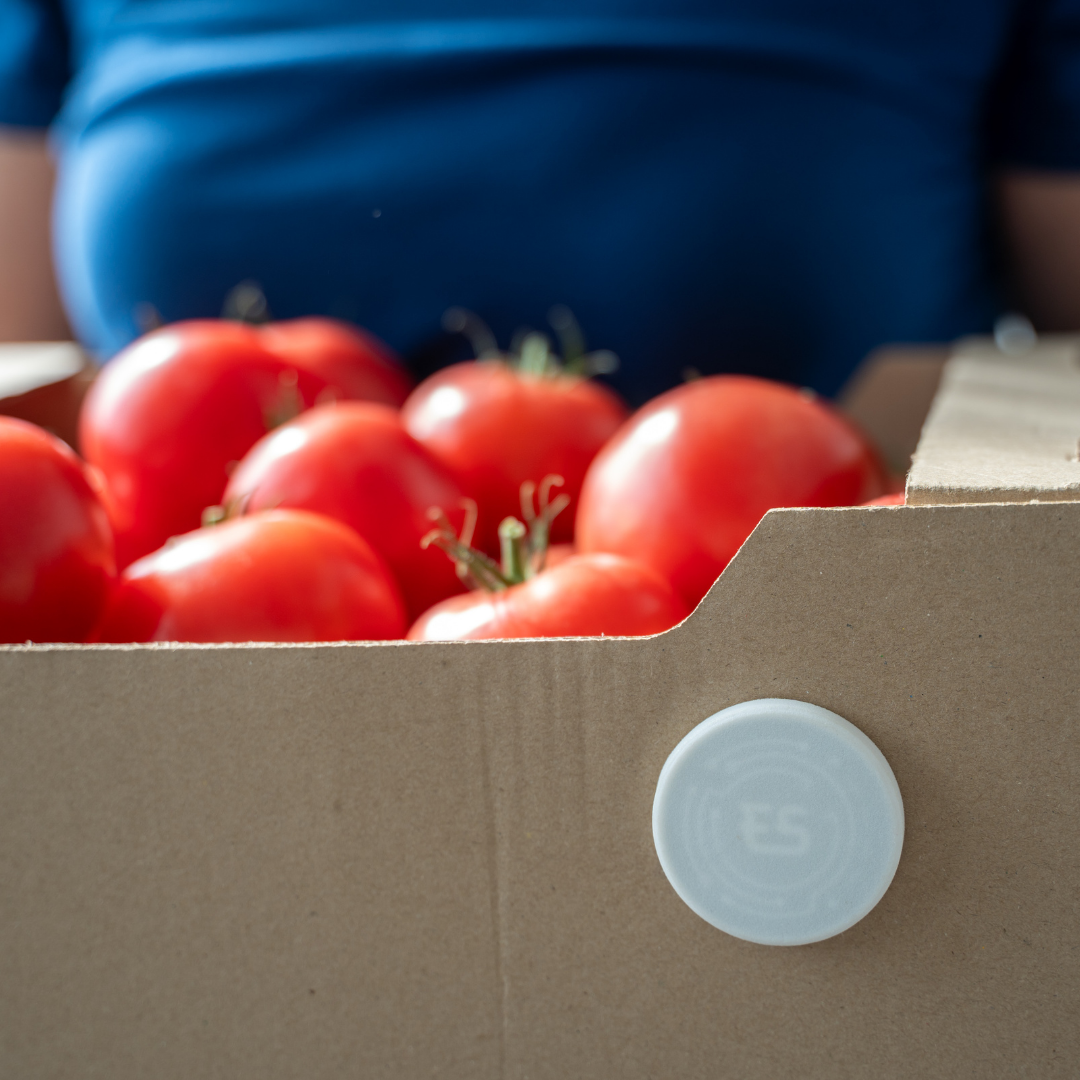
A documented cold chain is a continuous, verifiable record of the environmental conditions a food product was exposed to from the moment it left the warehouse until it was unloaded at the receiver. An independent temperature and humidity record kept directly next to the load provides objective evidence of due diligence for the shipper, the carrier and the receiver. Such documentation makes it possible to resolve doubts quickly at delivery, close claims based on facts and confirm that quality standards were maintained.
In everyday logistics, fresh and frozen food travels a complex route. Even with a fully functioning refrigeration unit, conditions inside the trailer or around the pallet can change. Understanding where temperature differences arise and how to record them correctly is key to protecting product quality and the security of business relationships.
Where and when do load conditions change?
Maintaining a stable temperature in refrigerated transport is a challenge that covers the entire logistics process, not just the drive itself. Temperature deviations most often occur when goods pass between different zones of responsibility.
Loading and unloading dock
The first critical point is loading and unloading. Opening the trailer doors causes air exchange between the vehicle interior and the surroundings. If the warehouse dock has no sealed cold-chain dock shelter, or pallets wait for loading in a warehouse corridor, the temperature of the outer layers of the load may start rising even before the refrigeration unit is switched on. A similar situation occurs during unloading, especially when acceptance into the destination warehouse takes longer than planned.
Transshipment and cross-docking centres
In groupage distribution, goods rarely travel directly from the producer to the final store. Transshipment in logistics hubs and cross-docking operations are standard. A pallet may be moved, checked and consolidated several times in transition zones. It is during these short windows that the load is most exposed to fluctuations in ambient temperature.
Uneven temperatures in the cargo space
Even while driving, conditions in a refrigerated trailer are not perfectly uniform at every point. Air movement depends on how pallets are stacked, how clear the circulation channels are and the distance from the evaporator. The zone directly below the unit behaves differently from pallets placed near the rear doors or directly on the floor.
Recording at the load vs. refrigeration unit readings
Many supply chain participants base their knowledge of a shipment solely on printouts from the thermograph integrated with the trailer's refrigeration unit. This is an important element of the vehicle's technical control, but it does not always reflect the microclimate directly next to the goods.
What does the refrigeration unit record?
The unit's thermograph measures the temperature of the supply air leaving the evaporator and the return air coming back to the refrigeration system. This shows whether the unit was working correctly, whether there was a power failure and what the general temperature of the trailer volume was. However, the unit has no insight into what is happening deep inside a stretch-wrapped pallet or how much the cartons near the doors warmed up while waiting at the dock.
What does a logger placed at the load show?
A small logger placed directly in a crate, carton or on a pallet measures temperature and humidity in the immediate vicinity of the product itself. This record reflects the thermal inertia of the goods, the microclimate created under the packaging film and the real impact of cooling interruptions during handling operations.
Having both readings makes it possible to distinguish precisely whether a temperature excursion resulted from incorrect operation of the trailer's refrigeration system or occurred during handling outside the vehicle.
Transport condition records as objective evidence
A reliably kept history of transport parameters is a tool that stabilises business cooperation between the food producer, the logistics operator and the retail chain. In disputes it removes guesswork and allows decisions to be based on facts.
Receiver complaints and rejected deliveries
The most common flashpoint is goods inspection at the receiver's dock. If a warehouse employee takes a spot measurement with a probe thermometer or pyrometer and records a value higher than the specification allows, the delivery may be put on hold or rejected.
In such a situation, a printout from the refrigeration unit alone is often questioned. Access to the full measurement history from a logger placed at the load makes it possible to check whether the deviation was superficial and short-lived, or whether the goods were kept in inappropriate conditions for many hours. This supports a rational quality decision instead of automatically writing off the batch.
Carrier disputes under the CMR Convention
When goods are damaged or lose their commercial value during carriage, the claim is settled under transport law and the CMR Convention. The key question is who had custody of the load when the irregularity occurred and whether the carrier exercised due diligence in maintaining the required conditions.
A record from a logger travelling with the load makes it possible to identify the moment when the temperature began to deviate from the norm. If the rise occurred during the journey, responsibility may lie with the carrier. If, however, the temperature rose before loading at the shipper's dock, the carrier gains evidence protecting it against unjustified claims.
Quality system requirements: HACCP, BRCGS, IFS and the ATP Agreement
Ensuring food safety under Regulation (EC) No 852/2004 and HACCP principles requires defining Critical Control Points (CCPs), one of the most important being storage and distribution temperature.
Leading international food safety standards such as BRCGS and IFS emphasise verifiable procedures and batch traceability. A documented history of environmental measurements gives auditors evidence that control procedures do not exist only on paper but are implemented in daily operations. In international transport, these rules are complemented by the ATP Agreement, which sets technical requirements for refrigerated transport equipment.
How load condition monitoring works in the eslog system
The eslog system is designed to deliver a precise temperature and humidity history without building complex technical infrastructure or involving IT departments.
- Reusable logger at the load: The eslog device is placed directly next to the goods being transported — in a carton, crate or on a pallet. The sensor regularly records ambient temperature and humidity throughout the journey. The device is built on Polish components, and its built-in battery provides up to 5 years of continuous operation. For loads that require monitoring conditions inside the product itself, work is under way on a dedicated measurement probe that will allow direct reading of the product's core temperature.
- Simple NFC reading with an ordinary smartphone: No dedicated readers or cables are needed to read the measurement history. The person receiving the shipment holds a standard NFC-enabled smartphone to the sensor. Data is read in a fraction of a second at the moment of delivery.
- Cloud data and reports: The downloaded data goes to a secure cloud. It is immediately visible in the mobile app and in the online panel, accessible to authorised people in the company. This makes it quick to generate a clear report for the quality department or a customer.
- Different modes of transport: Thanks to proximity communication, the solution works well in road transport and in air transport, where strict restrictions on radio transmission apply.
With this approach, both food producers and logistics operators gain a simple tool to reduce transport losses and build trust with trading partners.
Test temperature monitoring in your deliveries
If you want to see how eslog loggers perform on your everyday logistics routes and in your quality control processes, we invite you to join our pilot programme. Learn more and register your company: Free eslog pilot programme.
Frequently asked questions
How can you prove that the cold chain was not broken?
The most reliable evidence is a continuous record of temperature and humidity captured by a sensor placed directly next to the load. The eslog device stores up to 1,760 measurements in its memory (up to 1,173 measurements in the version with a humidity sensor), recording data at scheduled intervals throughout the route. The built-in battery powers the sensor for up to 5 years of continuous operation, eliminating the risk of the device running flat during transport or longer storage. The full report is downloaded contactlessly via NFC at delivery — it documents the history of the shipment and serves as evidence of product quality for the receiver, auditor or insurer.
Who is responsible for load temperature during transport?
Responsibility depends on the stage at which the deviation occurred. The shipper is responsible for properly preparing and pre-cooling the goods before loading, the carrier for maintaining the required parameters during carriage in line with the CMR Convention, and the receiver for prompt unloading and acceptance of pallets into the cold store.
What temperature data is useful during a HACCP audit?
Auditors primarily verify the continuity of records, the traceability of data assigned to a specific batch and the procedures followed when deviations occur. A digital history from temperature loggers makes it easier to demonstrate compliance with BRCGS, IFS and Regulation (EC) No 852/2004.
Does a temperature record help with delivery claims?
Yes, an independent measurement history from next to the load is an important argument when resolving quality disputes. It makes it possible to establish objectively whether the temperature deviation occurred during carriage or at the loading or unloading stage at the dock.
Can the eslog system measure the temperature inside the product itself?
Currently, eslog sensors measure ambient temperature and humidity directly next to the load (in a carton, crate or on a pallet). In parallel, the eslog team is developing a probe inserted directly into the product, designed for precise core temperature measurement in the most demanding cold chains.
How do you read an NFC logger?
Reading is done with an ordinary smartphone with NFC enabled and the app installed. Simply hold the phone to the logger when receiving the shipment, and the measurement data is downloaded and sent to the online panel.
Where is the logger data stored?
Measurements downloaded from the device are securely stored in the cloud. Users can access them through the online panel and the mobile app, from where they can download summaries and reports for business partners and auditors.